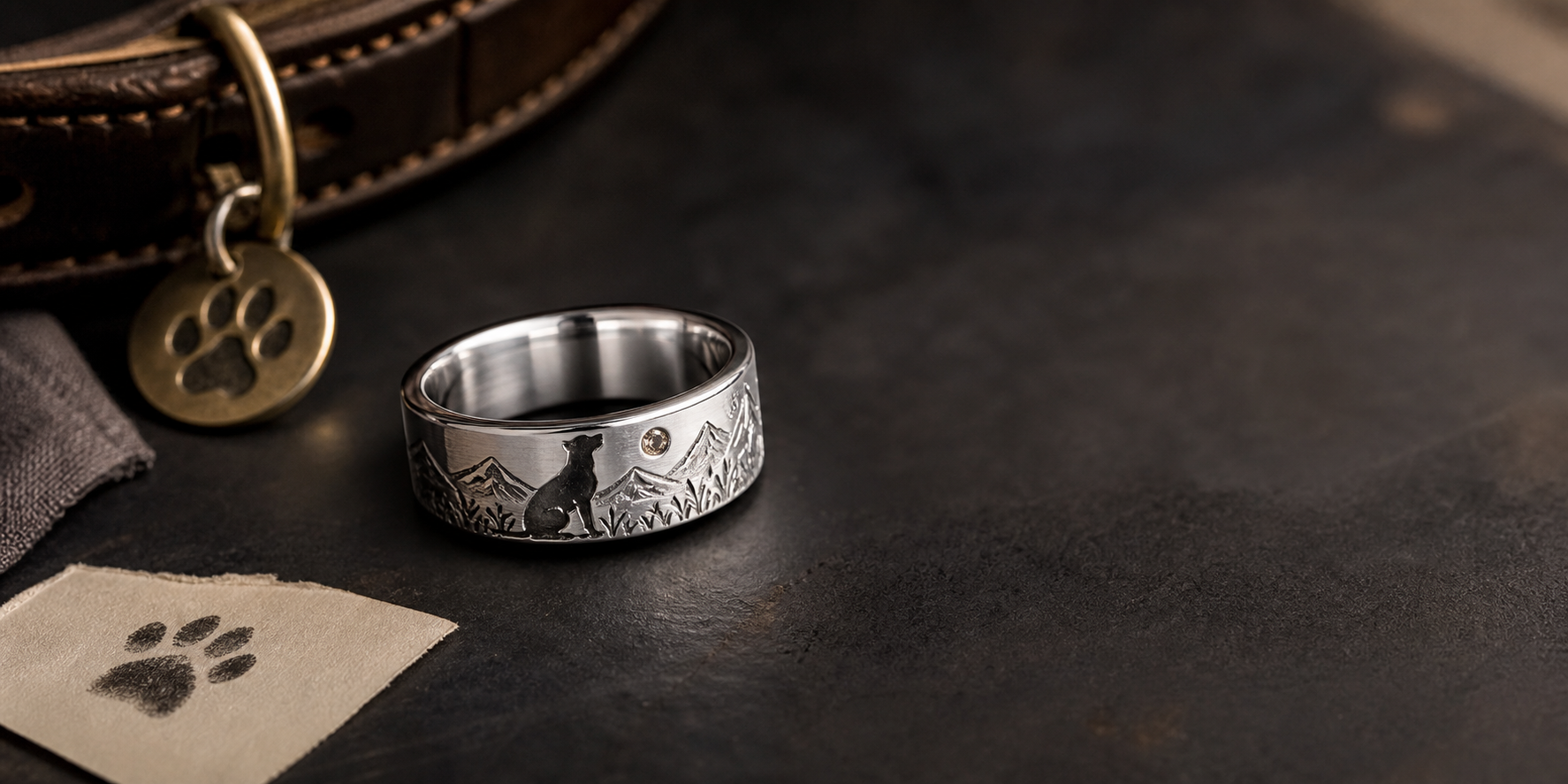
Pet bereavement support starts with admitting that the loss is real. A dog, cat, or lifelong companion can hold routines, family memories, workday comfort, and private language that does not fit neatly into a sympathy card. The first useful step is not a product decision. It is a small inventory of what still feels irreplaceable: the name you used at home, the favorite photo, the paw print from a vet card, the collar tag, the nickname, or the place where the pet always waited.
A keepsake should not pressure the family into deciding everything at once. Some families want a photo frame. Some want ashes kept safely. Some want a small engraved object. Some want a wearable ring because the memory belongs close to the hand. Any of those choices can be right when the object respects the pet's actual place in the family instead of turning grief into decoration.
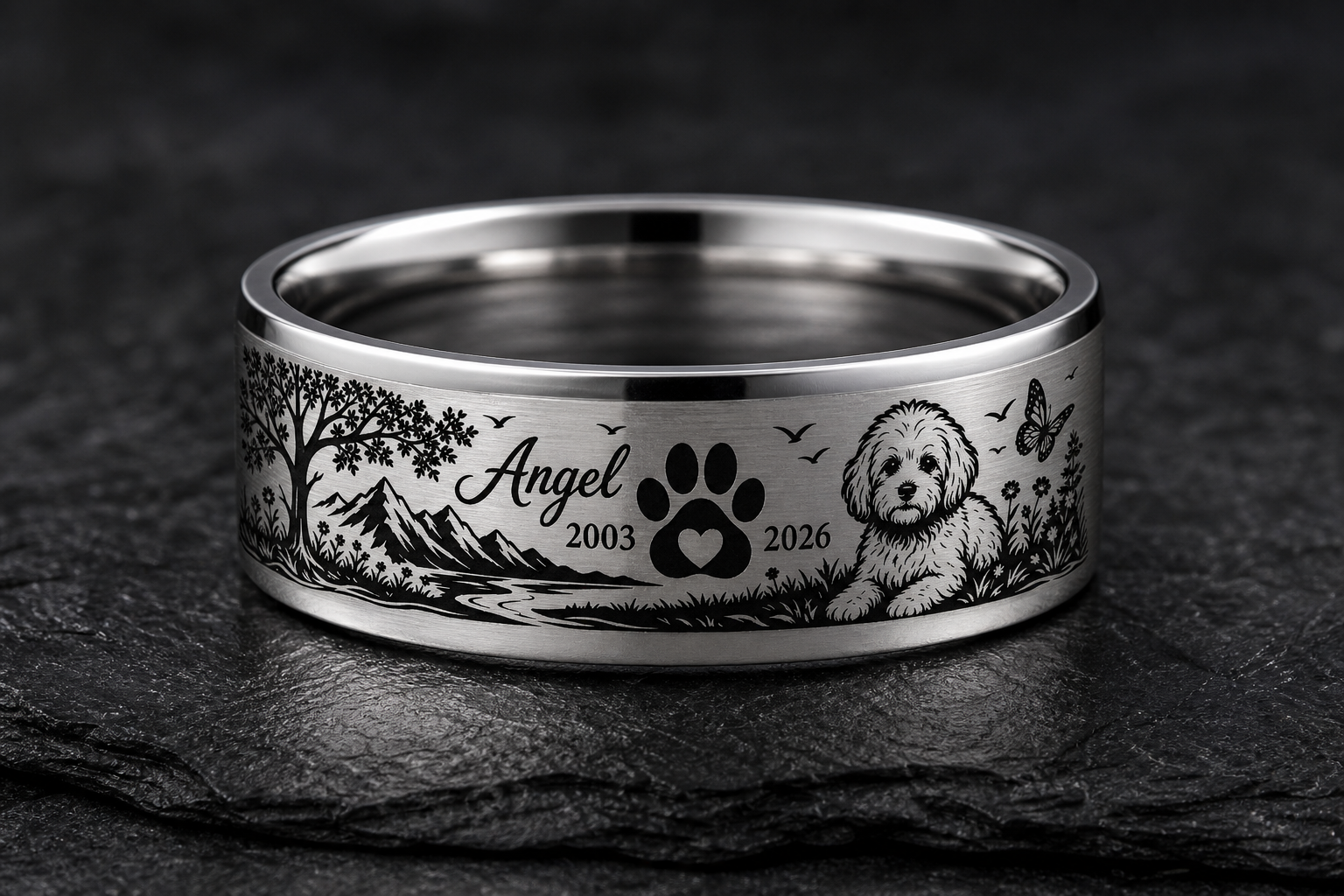
For a memorial ring, one source detail should lead. A paw print outside the band can be paired with a name or date inside. A collar-tag shape can inspire the ring border. A favorite photo can become a silhouette or portrait direction. A short phrase such as "Still Home," "Good Boy," "Run Free," or "Always With Me" can carry the emotional note without forcing too many words onto metal.
The strongest designs usually leave space. A ring worn every day needs to feel calm with ordinary clothes, work routines, and quiet mornings. That means the family may choose one visible symbol and one private inside message instead of several paw prints, hearts, dates, and phrases competing on the same surface.
If a source file will be used, preserve the cleanest original. Photograph paw prints straight on. Save the highest-resolution pet photo. Keep a collar tag image before it is packed away. Avoid screenshots of screenshots. The final engraving may simplify the source, but a clear original gives the designer more of the pet's real shape to work from.
Pet loss can also make small tasks feel heavy. A practical checklist helps: save the source files, write the exact name and dates, choose one phrase, decide whether the ring should feel tender or restrained, and note any colors or materials the wearer avoids. Those details are enough to begin a thoughtful design without deciding every finish immediately.
This site links to Friends of Irony ring guides because those pages answer the practical questions that come after the first grief step: how paw prints become engraving, what a pet memorial ring can include, what to engrave, and when to choose a broader custom memorial ring path.
Use the designer when the family has one clear memory anchor. Bring the pet's name, the best source image, a short phrase or date, and one sentence about why the companion mattered. That is enough to turn grief into a design brief without flattening the pet's story into generic memorial jewelry.