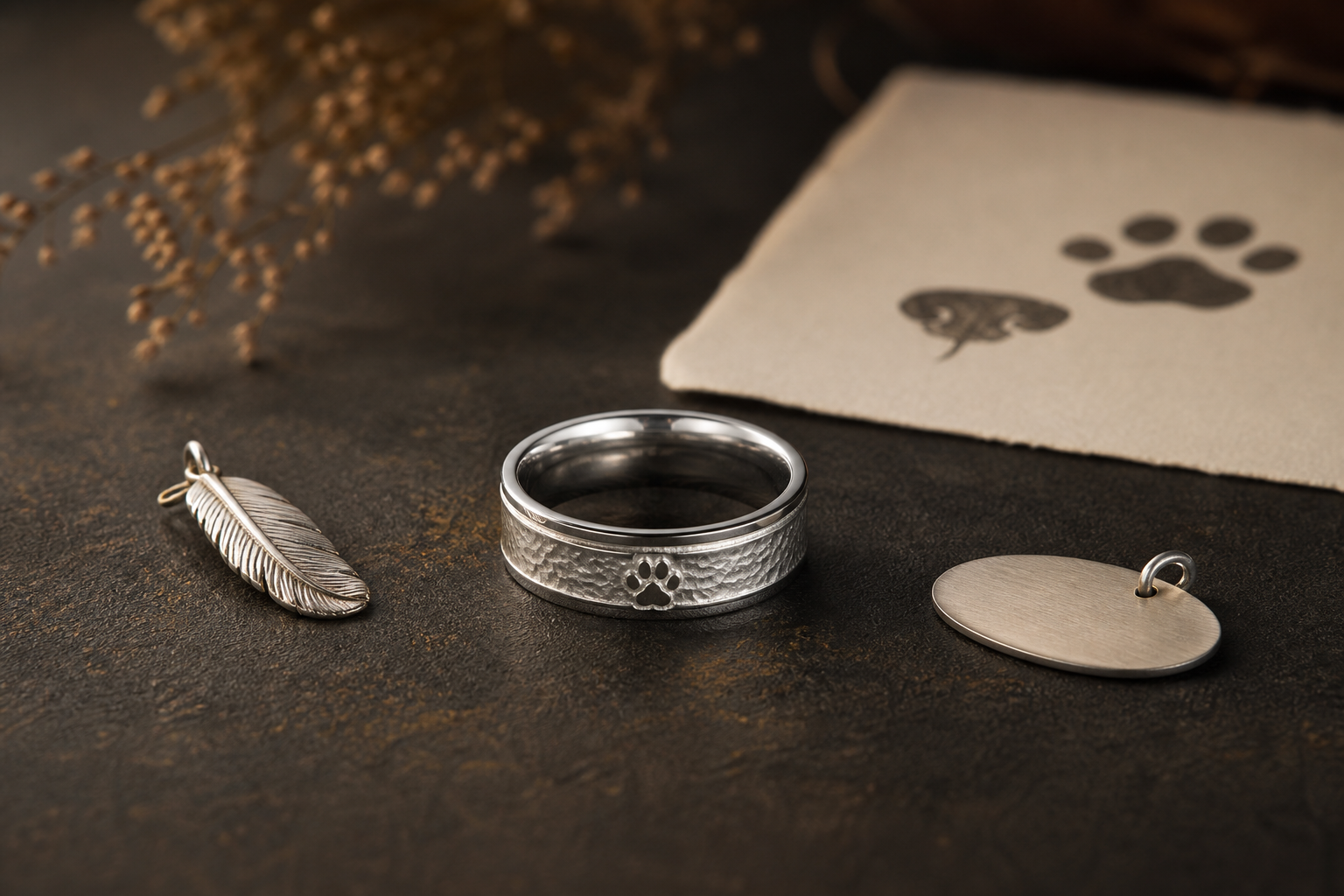
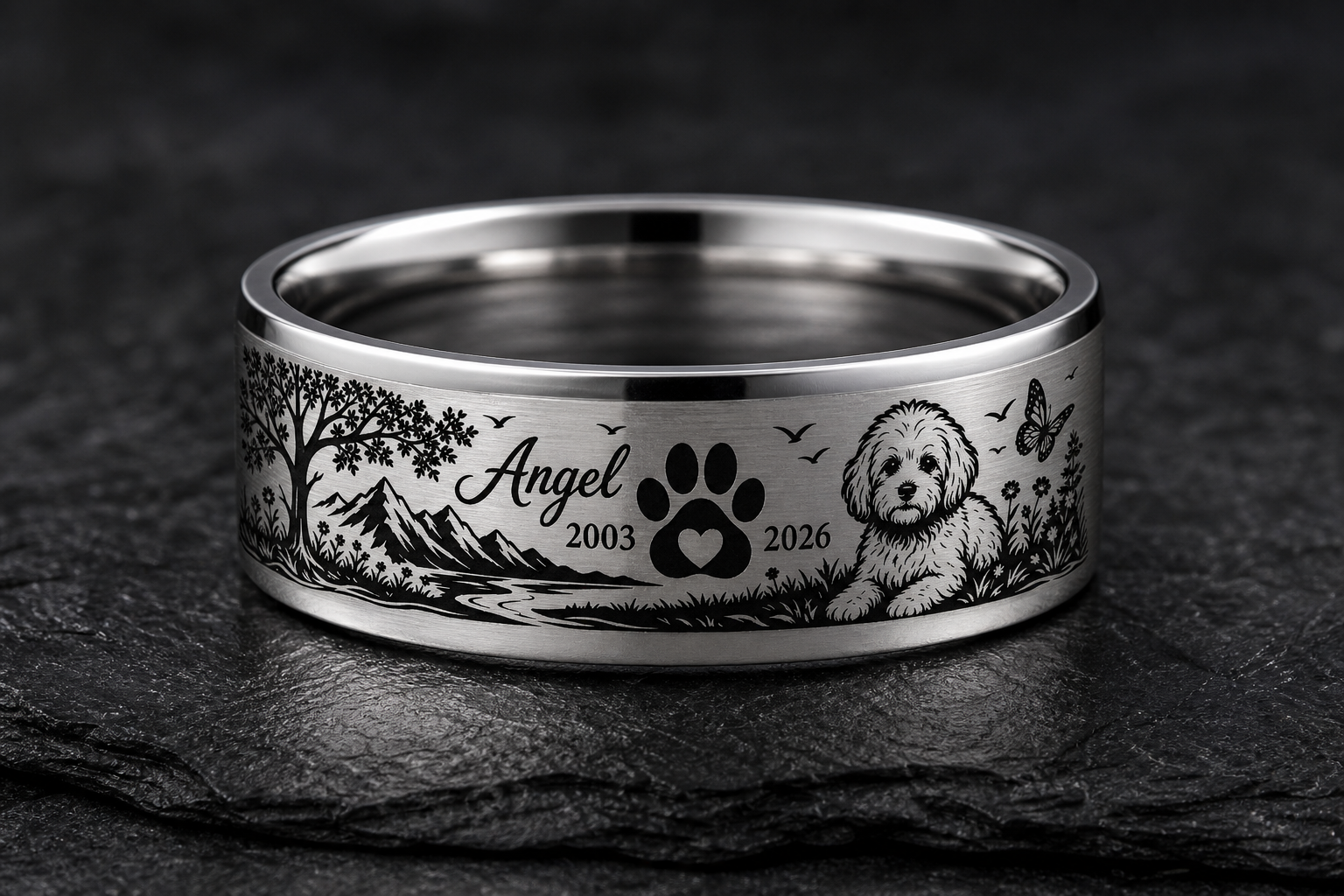
Pet loss keepsake ideas are easier to compare when each object has a job. A photo keeps the face visible. A paw print preserves touch. A collar tag carries the sound of daily life. A small framed note marks the date. A ring keeps the memory close to the person who wants to carry it outside the house.
The first decision is whether the keepsake should be private, visible, portable, or placed in the home. A shelf memorial can hold several objects. A ring cannot. That limitation is useful because it forces the design to choose the one detail that still feels like the pet.
Paw prints and nose prints are strong ring sources when the print is clear enough to simplify. A favorite photo can work when the pet's face or silhouette is recognizable. A collar tag can inspire a small shape or inside engraving. A phrase can work when it sounds like the family, not like generic sympathy wording.
A ring is not the only good answer. Some families should start with a folder of saved source files and decide later. That folder can include the original photo, vet-card print, tag image, adoption date, and a few phrase options. It prevents the family from losing usable details while still giving grief room.
When a memorial ring is the right fit, keep the outside focused. A single paw print, silhouette, or name reads better than a full memorial collage. The inside can hold the date, nickname, or private phrase. This gives the object both a visible anchor and a private layer.
The Friends of Irony dog and pet memorial ring guides are linked here because they help turn those source details into specific design choices. Use them after the family knows which detail should lead.